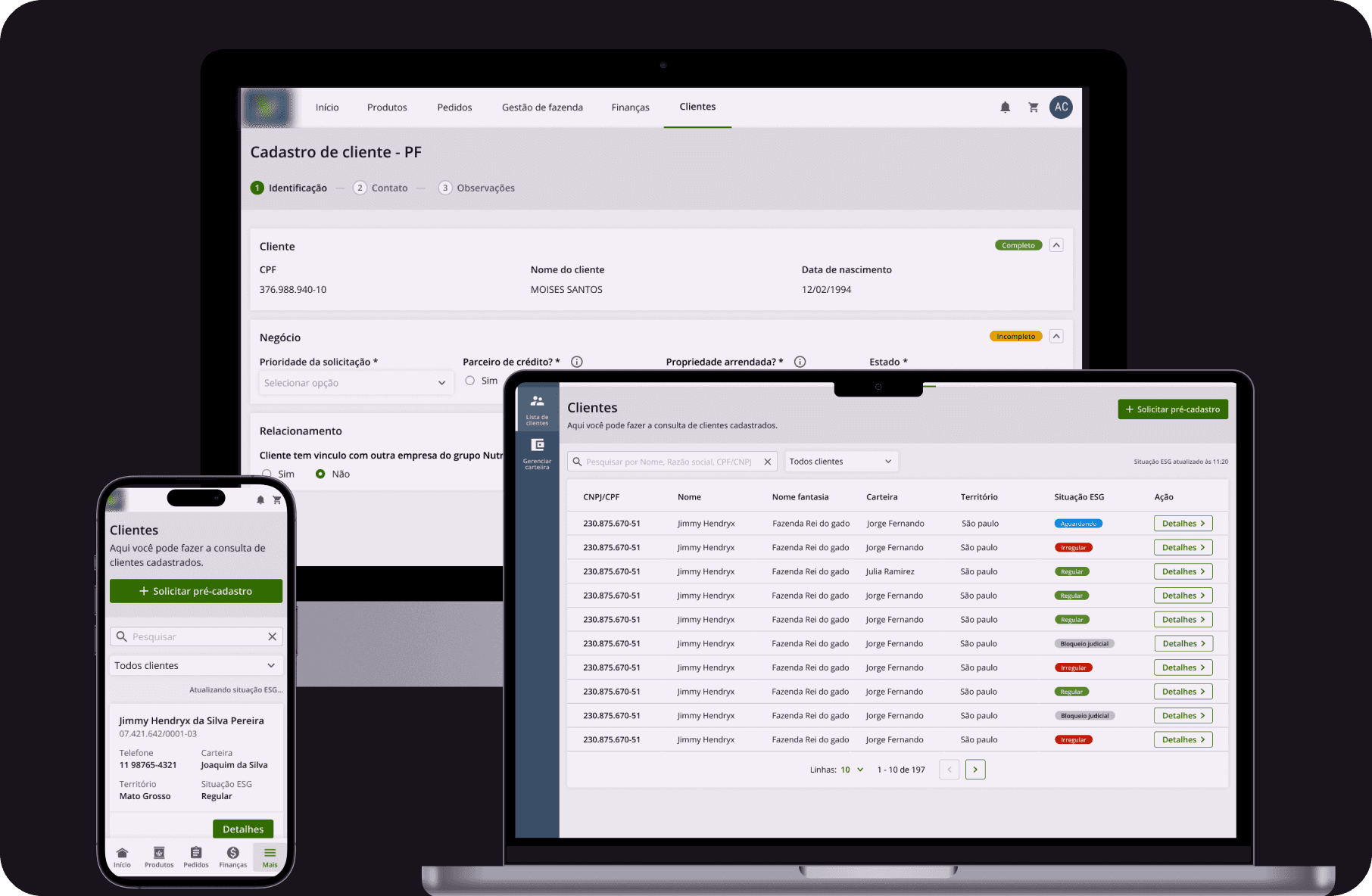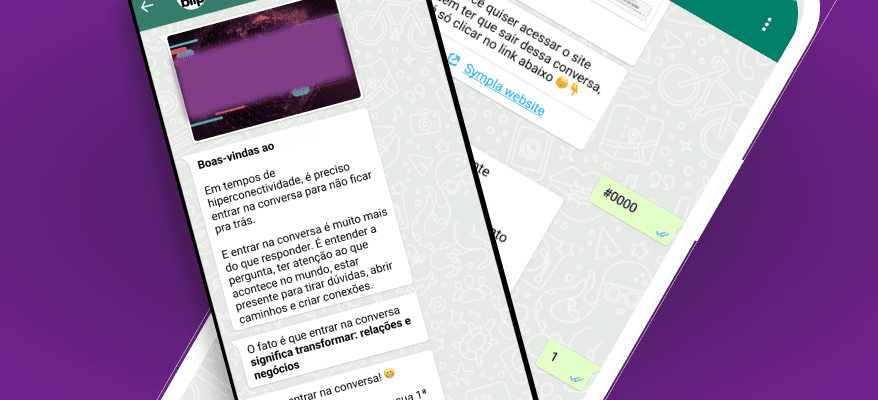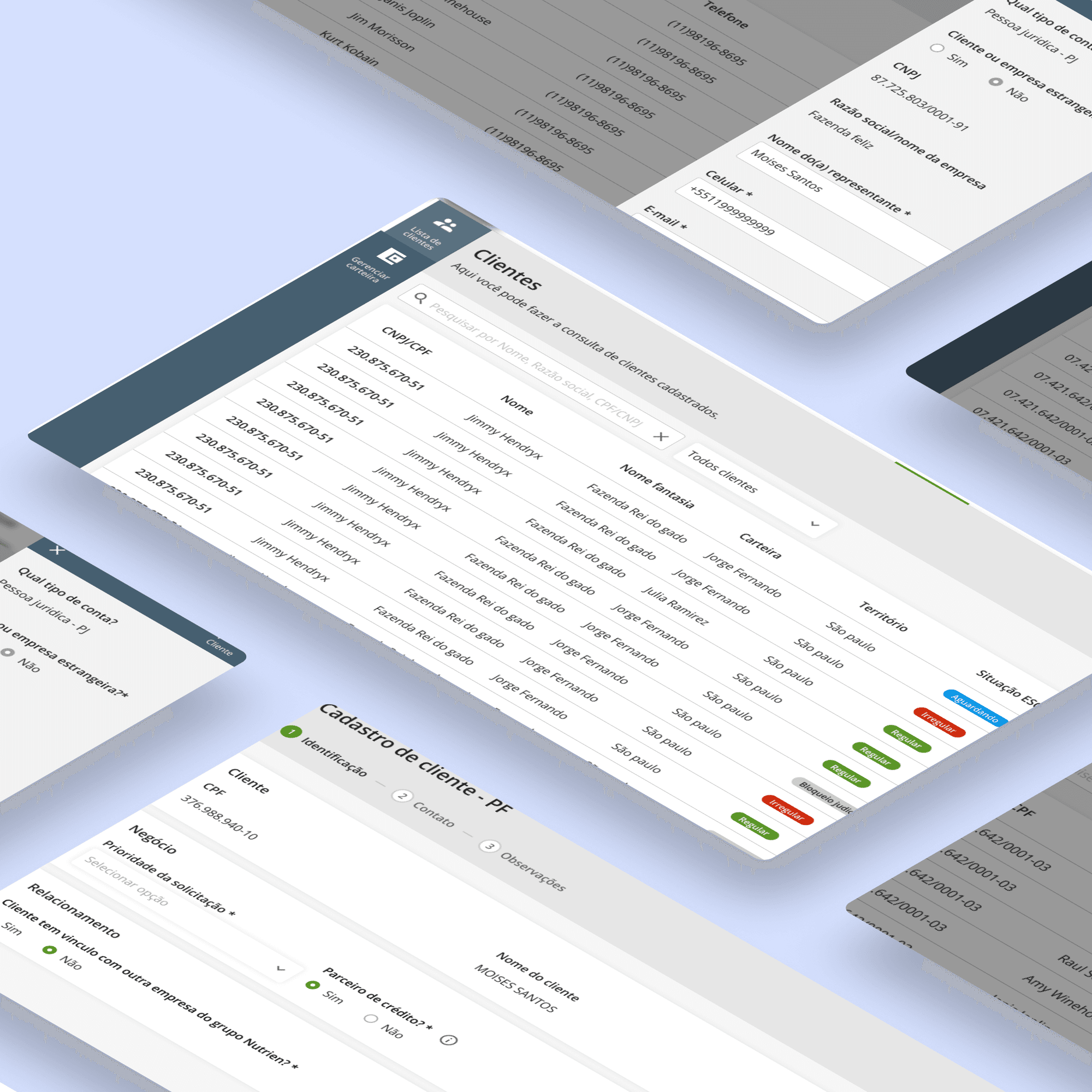
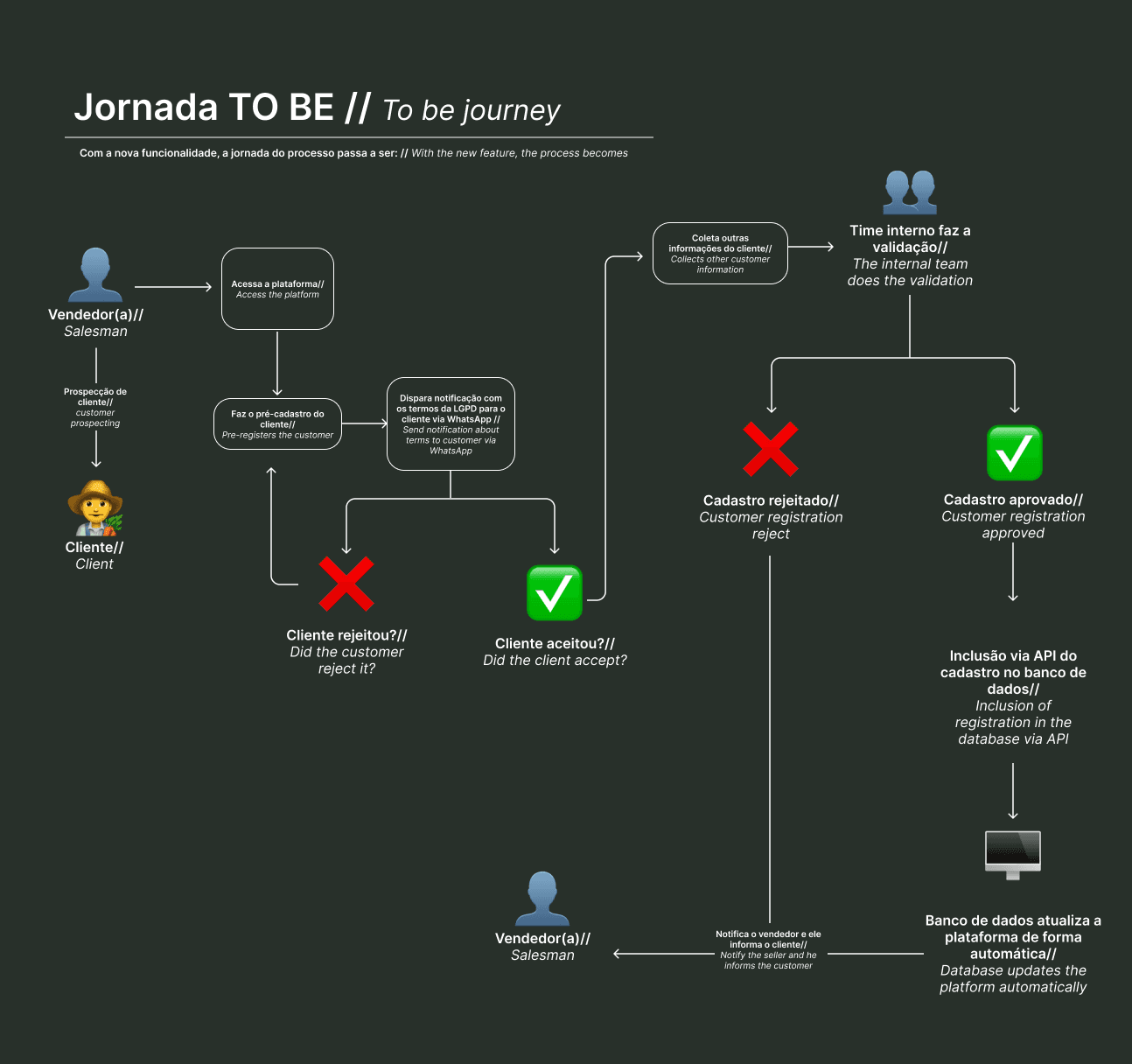
Scanning of the customer registration process using an external API to consult CPF/CNPJ, auto-complete customer's pre-existing information in the Federal Revenue database, and inclusion of LGPD via WhatsApp.
Category:
UX/UI Designer
Industry
Agribusiness
Duration
1 year
Context
For this company, the foundation of any service offered by the company is registration. However, the process had some problems, such as:
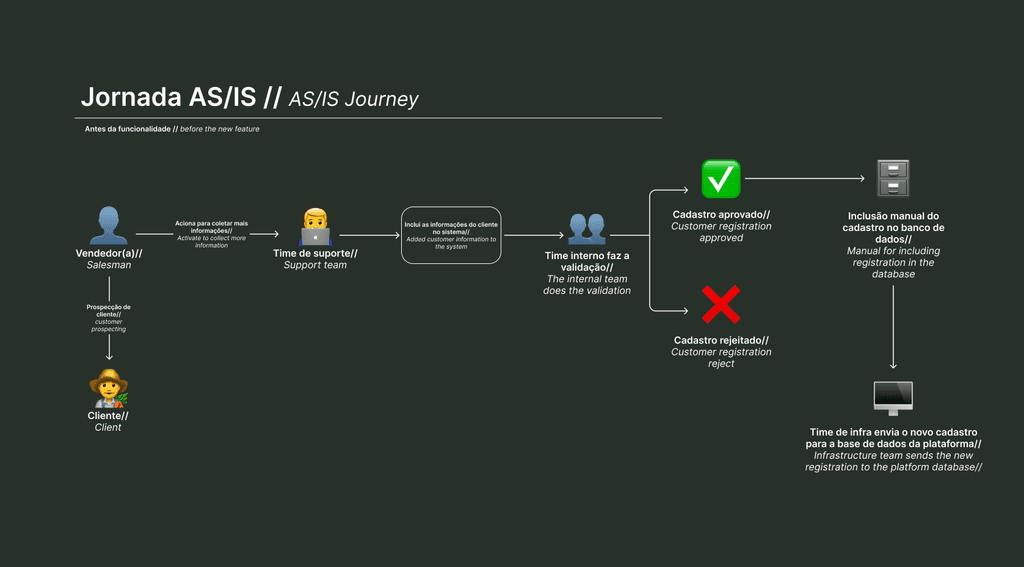
Manual process
Slowness in the registration analysis and approval process
Many teams involved in the collection of sensitive data
Not being in compliance with the LGPD Law
User profile
Despite having quite diverse customer profiles, the frustrations observed during the registration process were mostly related to:
Mistrust when providing sensitive data
Delay in completing the registration was hampering the purchase negotiation.
As they are customers in the Agribusiness sector, some materials have a specific period for purchase and delivery to ensure that producers do not suffer losses during planting and harvesting phases.
Lack of visibility into the process
Process
Discovery:
Materials Analysis: this analysis allowed me to have a greater understanding of the main points of conflict in the process.
Participate in trainings: When I joined the project, the internal team that analyzed the records made some changes to the process. To ensure that the new process was included in the functionality, I attended the training sessions to understand the points of change.
Interviews with internal teams: I spoke with the internal teams to understand impacts and essential information for the process.
Understanding APIs with the development team: With the process change, the squad identified the opportunity to use third-party APIs to query and consume some data.
Design and Development
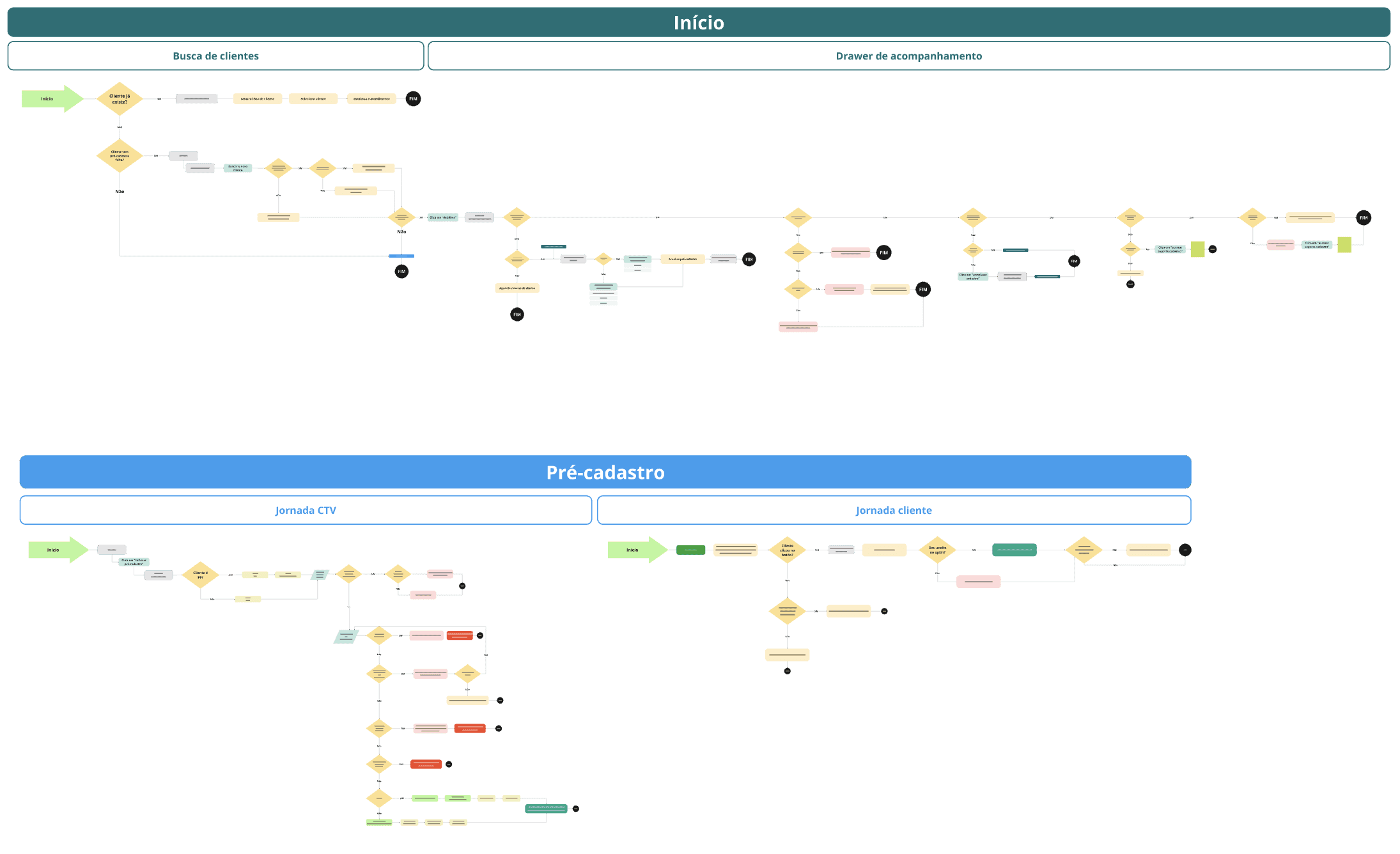
Information Architecture: Based on these understandings, I created a flowchart to map the process journey, points of attention, and the moments when the APIs would be triggered.
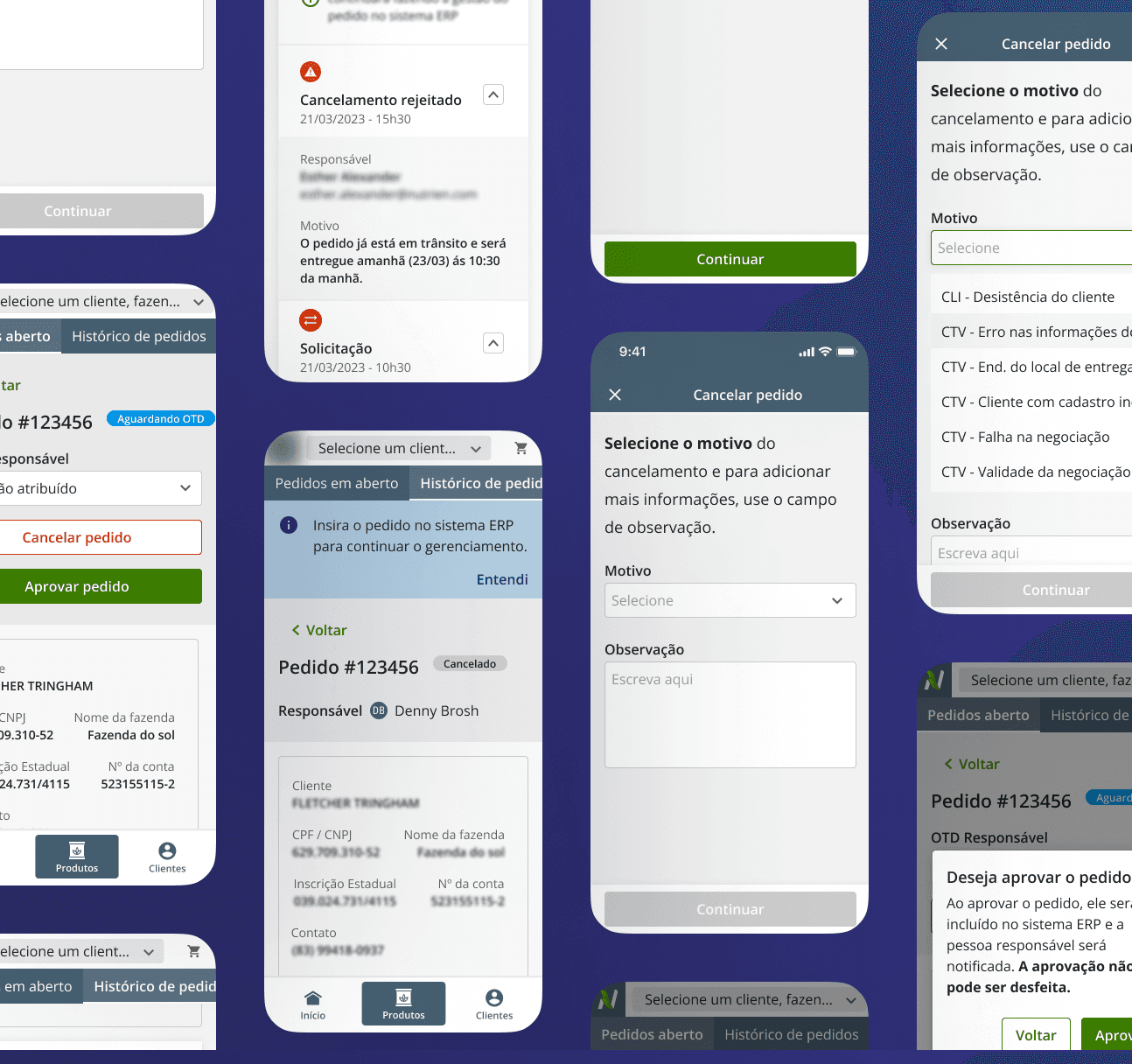
UX/UI Design: With the approved flowchart, I developed low-fidelity prototypes for structure validation. After approval, it was time for high-fidelity prototypes.
Development phase: During the development phases, it was necessary to make some adjustments to the layout.
Production Testing
Due to the changes in the middle of the process, it was only possible to negotiate the user testing phases after the production release.
CES Survey: Without the possibility of running usability tests before the production release, I was able to negotiate with the business team to activate the CES survey in the first month. This way, it was possible to identify some behaviors and measure the level of difficulty users were experiencing with the new functionality.
Usability testing: After the completion and analysis of the CES survey, it was possible to conduct usability testing. This way, we were able to identify areas to be improved and better understand some behaviors identified in the CES survey.
Result
As a result, we had:
Aiming to increase internal team usage, it was included in the company's OKR that by the end of the year, 50% of registrations should be done using the registration tool
After the results of usability tests and analysis of the satisfaction survey following the launch of the functionality in production, it was possible to include an evolution process in the team's roadmap.